L-Theanine for Focus: How It Works, Dosing, and What to Look For on a Label
| What it is | L-theanine is an amino acid found almost uniquely in green tea (Camellia sinensis). |
| How it works | It is studied for promoting alpha brain waves — a state of relaxed, wakeful attention — and for gently modulating calming neurotransmitters. |
| Studied dosage | About 100–200 mg; often paired with caffeine at roughly a 2:1 theanine-to-caffeine ratio. |
| Label tip | Choose the L-form with a stated mg amount; Suntheanine is a known pure L-isomer. |

If you have ever felt that green tea gives you a gentler, more focused lift than coffee — alert but not wired — you have already met L-theanine. It is the amino acid behind that calm-but-sharp feeling, and it has become one of the most popular ingredients for people who want attention without the jitters. This guide covers L-theanine for focus from the ground up: what it is, how it works in the brain, the dose the research uses, why it is so often paired with caffeine, and how to read a label so you actually get the real thing.
What is L-theanine?
L-theanine is a non-protein amino acid found almost exclusively in the tea plant, Camellia sinensis, and in a couple of rare mushrooms. It is a big part of what gives quality green tea its smooth, savoury “umami” character. Unlike most amino acids, it is not used to build the proteins in your body — instead, it is prized for what it does once it reaches the brain. And it does reach the brain: L-theanine crosses the blood–brain barrier, which is precisely why it can influence how you feel and focus.
How does L-theanine work for focus?
The most cited mechanism is deceptively simple and genuinely interesting.
Alpha brain waves
Your brain produces electrical rhythms at different frequencies depending on what you are doing. Alpha waves are associated with a state of relaxed, wakeful attention — think of the calm alertness of someone deep in a task but not stressed. L-theanine has been studied for its ability to promote alpha-wave activity, which is the clearest window into why people describe it as “focus without the edge.” It is not sedating and it is not stimulating; it nudges the brain toward that settled, in-the-flow zone.
Neurotransmitter balance
Research also explores how L-theanine gently influences calming neurotransmitters such as GABA, alongside dopamine and serotonin. The picture that emerges is of a compound that supports a relaxed baseline, which in turn makes sustained concentration feel easier and less effortful.

Why L-theanine and caffeine are the classic pairing
If there is one nootropic combination almost everyone eventually discovers, it is L-theanine plus caffeine. On its own, caffeine is a reliable stimulant — but for many people it comes with a jittery, over-caffeinated edge and a later crash. L-theanine is studied for taking the sharp corners off that experience: keeping caffeine’s alertness while smoothing the jitters into something calmer and more sustained.
The commonly referenced ratio is roughly 2:1 theanine to caffeine — for example, about 200 mg of L-theanine alongside 100 mg of caffeine. Plenty of people adjust from there based on their own caffeine tolerance. The takeaway is not a magic number but a principle: L-theanine and caffeine are complementary, and together they aim for a smoother version of “switched on.”
L-theanine beyond focus: calm and everyday stress
Although this guide is about focus, it is worth knowing why L-theanine has such a loyal following: the same alpha-wave, calm-alertness mechanism that helps concentration is also why people reach for it to take the edge off a tense day. It is studied for supporting a relaxed state without sedation, which is an unusual and useful combination. That is the whole appeal — you stay switched on, but the background hum of tension eases. For anyone who finds that stress and scattered attention feed each other, a calmer baseline can make focus feel less like a fight.
Some people also use L-theanine in the evening to help wind down before bed, precisely because it relaxes the mind without knocking you out. Whether you use it for daytime focus, for smoothing out coffee, or for evening calm, the underlying tool is the same molecule doing the same gentle thing — nudging the brain toward a settled, relaxed-but-awake state.
How quickly does L-theanine work?
Compared with slow-build botanicals such as Bacopa monnieri — which are judged over 8 to 12 weeks — L-theanine is refreshingly fast. It is absorbed relatively quickly, and many people notice its calming, focusing quality within an hour or so of taking it, especially alongside caffeine. That makes it easy to feel out for yourself: try it on a working morning and see whether your usual coffee lands more smoothly. Because it works acutely rather than cumulatively, you do not need a long trial period to know whether it suits you — though, as with anything, consistency helps you learn how it fits your own routine.
Is L-theanine safe? A note on tolerance
L-theanine is generally regarded as well tolerated, and because it is not a stimulant, it does not carry the same jittery downside as high-dose caffeine. It is also not known to be habit-forming in the way stimulants can be. That said, a supplement is still a supplement: if you are pregnant or nursing, take medication, or manage a health condition, it is sensible to run any new addition past a qualified healthcare professional first. Start at the lower end of your product’s range and pay attention to how you respond.
L-theanine dosage: what the research uses
Human studies on attention and relaxation typically use around 100 to 200 mg of L-theanine per serving. It is well tolerated, works relatively quickly compared with slow-build botanicals like Bacopa, and does not require a long loading period. Because it is not a stimulant, it does not have to be timed away from the evening — some people even use it later in the day to wind down. As always, follow the amount on your product and check with a healthcare professional if you are pregnant, nursing or taking medication.
See L-Theanine in the Memodyne Blend
What to look for on an L-theanine label
L-theanine is one of the easier ingredients to shop for once you know the tell-tales:
- The L-form specifically. You want L-theanine — the naturally occurring isomer. A vague “theanine” can, in theory, include the less-studied D-form.
- A stated milligram amount. Look for a clear per-serving figure (for example, 200 mg), not an ingredient buried inside an undisclosed proprietary blend.
- Suntheanine, if listed. This is a well-known branded, pure L-isomer produced by a patented process — a reassuring marker, though not the only way to get quality material.
- Clean manufacturing. Made in a GMP-compliant, FDA-registered facility, ideally with third-party testing.
The proprietary-blend issue in particular trips up a lot of shoppers. If a label lumps L-theanine into a “focus blend” with a single combined weight, you cannot tell whether you are getting a research-backed 200 mg or a token sprinkle. Our full guide on how to read a nootropic supplement label shows you exactly how to spot that trick.
How L-theanine fits with the rest of a nootropic stack
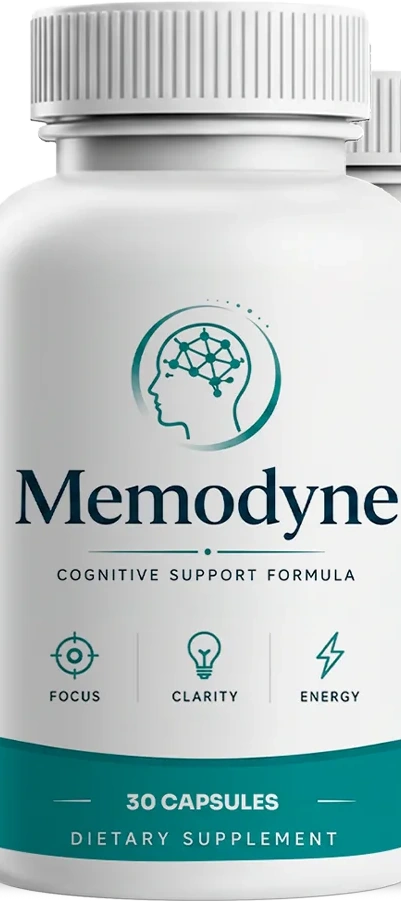
L-theanine is the “in-the-moment” ingredient. It gives you calm focus today, which complements the slow, cumulative botanicals beautifully. It pairs naturally with Bacopa monnieri, which builds memory support over weeks, and with adaptogens like Rhodiola rosea that help the body cope with everyday mental fatigue. Together they cover the whole arc — steady attention now, resilience under load, and memory support over the long term. If you would rather not build a shelf of single-ingredient jars, the all-in-one Memodyne formula brings these actives together in one daily capsule.
Calm, focused, and simple
Memodyne combines L-theanine with Bacopa, Lion’s Mane and a supporting botanical blend for calm, everyday focus — in one once-daily capsule, backed by a 60-day guarantee.
See Memodyne PackagesFrequently asked questions
How does L-theanine help with focus?
L-theanine is an amino acid from green tea that is studied for promoting alpha brain-wave activity, a state associated with relaxed, wakeful attention. It supports a calm, settled kind of focus without acting as a stimulant.
What is the best L-theanine dosage for focus?
Research commonly uses about 100 to 200 mg of L-theanine. When paired with caffeine for focus, a frequent ratio is roughly 200 mg L-theanine to 100 mg caffeine, though many people adjust to their own tolerance.
Can I take L-theanine with caffeine?
Yes — this is one of the most popular nootropic pairings. L-theanine is studied for smoothing out the jittery edge of caffeine while keeping its alertness, which is why the two are often combined for calm, focused energy.
Does L-theanine make you sleepy?
No. L-theanine promotes a relaxed but wakeful state rather than sedation. It does not act like a sleeping pill, which is why it can be used during the day for focus, though some people also use it in the evening to unwind.
What should I look for on an L-theanine label?
Look for the L-form specifically (L-theanine, not just theanine), a stated milligram amount per serving rather than a hidden proprietary blend, and clean, GMP manufacturing. Suntheanine is a well-known branded pure L-isomer.
References
- Office of Dietary Supplements, National Institutes of Health — amino-acid and botanical ingredient fact sheets (ods.od.nih.gov).
- National Center for Complementary and Integrative Health — green tea overview (nccih.nih.gov).
- Asia Pacific Journal of Clinical Nutrition — studies on L-theanine, alpha activity and attention.
- Nutritional Neuroscience — reviews of L-theanine and caffeine combinations on cognition and mood.
† These statements have not been evaluated by the FDA. This product is not intended to diagnose, treat, cure or prevent any disease. This article is for general information only and is not medical advice.