Bacopa Monnieri Benefits and Dosage: How This Nootropic Herb Works
| What it is | Bacopa monnieri (Brahmi) is an Ayurvedic herb traditionally used to support memory and learning. |
| How it works | Its active bacosides are studied for supporting antioxidant activity, healthy signalling and the dendrites that neurons use to connect. |
| Studied dosage | About 300 mg/day of an extract standardized to ~45–55% bacosides, taken with food. |
| Timeline | Benefits are typically measured after 8–12 weeks of daily use, not overnight. |

If you have been reading about natural ways to support memory, one name comes up again and again: Bacopa monnieri. It is one of the most studied botanicals in the whole nootropic category, and for good reason — it has been used for memory and learning in Ayurvedic tradition for well over a thousand years. This guide walks through the real Bacopa monnieri benefits and dosage details in plain language: what the herb is, how it is thought to work, the dose that shows up in research, how long it takes, and — crucially — what to look for on a label so you actually get the active compounds you are paying for.
What is Bacopa monnieri?
Bacopa monnieri is a small, creeping marsh plant with little white or pale-purple flowers. In India it is known as Brahmi, a name derived from Brahma, the creator in Hindu tradition — a hint at how highly the plant has long been regarded for the mind. Traditional Ayurvedic practitioners used it as a medhya rasayana, a category of herbs believed to support intellect and memory, and it was often given to students learning long passages of text by heart.
Modern interest circled back to Bacopa precisely because that traditional reputation is so specific. Many herbs are described vaguely as “good for you.” Bacopa was always about one thing: retaining new information. That focus is exactly why it has become a cornerstone ingredient in modern memory formulas, including Memodyne’s botanical blend.
How does Bacopa monnieri work?
You do not need a biochemistry degree to understand the basics, because Bacopa’s story really comes down to a family of compounds called bacosides. These are triterpenoid saponins — the plant’s signature active constituents — and they are what researchers standardize and measure. When a study or a label talks about Bacopa “potency,” it is almost always talking about bacoside content.
Researchers have examined several ways bacosides may support the brain, and it helps to think of them as working together rather than through a single switch:
1. Antioxidant support in brain tissue
The brain is a hungry, oxygen-thirsty organ, and that metabolism generates oxidative by-products. Bacosides have been studied for their antioxidant activity in nervous tissue — in other words, helping to mop up some of that everyday oxidative stress so the neural network can keep running smoothly.
2. Healthy signalling chemistry
Memory depends on neurotransmitters, especially acetylcholine, the messenger most associated with learning and recall. Bacopa has been studied for its supportive role in maintaining healthy levels of these signalling chemicals, which is one reason its traditional reputation centres on memory rather than raw stimulation.
3. Dendritic branching
Perhaps the most interesting line of research looks at dendrites — the tree-like branches neurons use to receive signals from their neighbours. Animal research has explored Bacopa’s role in supporting dendritic growth and branching, which fits neatly with its slow, cumulative, “builds over weeks” character.

Put those threads together and you get a picture of a botanical that works on the infrastructure of memory rather than delivering a quick, caffeine-style jolt. That is also why Bacopa is a poor choice if you want something you can feel in twenty minutes — and an excellent choice if you are willing to be consistent for a couple of months.
Bacopa monnieri benefits people look for
It is important to describe benefits the honest way: Bacopa is a supplement, not a medicine, and it is not intended to diagnose, treat, cure or prevent any condition. With that framing, here is what draws people to it and what the research tradition emphasises:
- Memory and recall. The single most studied outcome — particularly the retention and recall of newly learned information.
- Speed of learning. Some research looks at how efficiently people acquire new material over a course of daily use.
- Calm focus. Unlike stimulants, Bacopa is not associated with jitteriness; many people describe a steady, settled kind of attention.
- Everyday resilience to stress. As an adaptogen-adjacent herb, it is traditionally used to support a balanced response to daily mental load.
Bacopa monnieri dosage: what the research actually uses
This is the part most people get wrong, so let us be precise. When you read about a “studied dose,” it almost always refers to a standardized extract, not raw powder.
Standardized extract
The most common protocol in human research is roughly 300 mg per day of a Bacopa extract standardized to about 45–55% bacosides. Some studies split this into two doses; many use it once daily. A handful of trials go up to around 450–600 mg for specific purposes, but 300 mg of a well-standardized extract is the reliable reference point.
Whole-herb powder
Traditional whole-herb Bacopa powder is far less concentrated, so traditional preparations use considerably more — often measured in grams rather than milligrams. This is not “better” or “worse,” but it makes the bacoside percentage on the label the only fair way to compare products.
Take it with food
Bacosides are fat-soluble, so Bacopa is best taken with a meal that contains some fat. This supports absorption and, just as importantly, heads off the mild digestive upset that a minority of people notice when they take Bacopa on an empty stomach. Building it into breakfast is an easy, sustainable habit.
See Bacopa in the Memodyne Blend
How long does Bacopa take to work?
Patience is the whole game. Because Bacopa appears to work by supporting the underlying machinery of memory, its effects accumulate. In most controlled research, memory-related benefits are measured after 8 to 12 weeks of uninterrupted daily use. A week is not a fair trial; twelve weeks is. If you are the kind of person who abandons a supplement after four days because you “didn’t feel anything,” Bacopa will frustrate you. Treat it like a daily habit — the way you would a fitness routine — and give it the time the research does.
What to look for on a Bacopa label
Here is where a little knowledge saves you money. Two Bacopa products can look identical and deliver wildly different amounts of active compound. Scan for these details:
- A stated bacoside percentage. Look for wording like “standardized to 50% bacosides.” No percentage usually means no guarantee of potency.
- The actual milligrams. A label should tell you how many milligrams of Bacopa extract are in each serving, not bury it inside a vague blend.
- Extract vs. powder. A concentrated standardized extract at 300 mg is not the same as 300 mg of raw powder. Know which you are buying.
- Clean manufacturing. Made in a GMP-compliant, FDA-registered facility, with third-party testing where possible.
If reading a Supplement Facts panel still feels like decoding a foreign language, our full walk-through — how to read a nootropic supplement label — breaks down every line, including standardization percentages and the proprietary-blend trap.
How Bacopa fits with other nootropic ingredients
Bacopa rarely travels alone in modern formulas, and that is deliberate. It supports memory over the long haul, but it is not a stimulant and it is not fast. Pairing it with complementary actives covers more ground:
- Lion’s Mane mushroom is studied for supporting nerve-growth signalling — a different mechanism from Bacopa’s.
- L-theanine adds calm, in-the-moment focus that Bacopa’s slow-build approach does not provide.
- Adaptogens such as Rhodiola round out resilience to everyday mental fatigue.
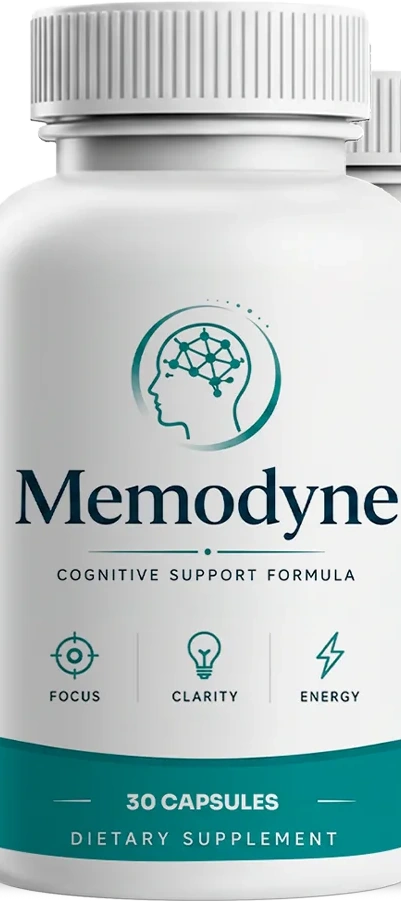
For the bigger picture of how these botanicals fit together, see our overview of nootropic herbs for memory and focus after 40. And of course, an all-in-one daily capsule like Memodyne removes the hassle of buying, measuring and remembering several separate jars.
Bacopa, done for you — daily
Memodyne pairs a standardized Bacopa monnieri extract with Lion’s Mane, L-theanine and a supporting botanical blend in one easy daily capsule — backed by a 60-day guarantee.
See Memodyne PackagesFrequently asked questions
What is the recommended Bacopa monnieri dosage?
Most research uses about 300 mg per day of a Bacopa extract standardized to roughly 45–55% bacosides, taken with food for around 8–12 weeks. Whole-herb powders are used at higher amounts because they are less concentrated. Always follow the dose printed on your product and speak with your clinician if you take medication.
How long does Bacopa monnieri take to work?
Bacopa is a slow-and-steady botanical. In studies, benefits for memory-related tasks are typically measured after 8 to 12 weeks of daily use rather than after a single dose, so consistency over several weeks matters far more than any one capsule.
What are bacosides and why do they matter?
Bacosides are the saponin compounds in Bacopa monnieri that researchers consider its main active constituents. Because they drive potency, quality products state a standardized bacoside percentage on the label — commonly 45–55% — so you know how much active you are getting.
Should Bacopa be taken with food?
Yes. Bacosides are fat-soluble, and taking Bacopa with a meal that contains some fat can help with absorption and reduce the mild stomach upset that some people notice when they take it on an empty stomach.
Can I take Bacopa with other nootropic herbs?
Bacopa is frequently combined with botanicals such as Lion’s Mane and L-theanine because they support memory and focus through different mechanisms. If you take prescription medication, check with a healthcare professional before combining supplements.
References
- National Center for Complementary and Integrative Health — herb overviews including Bacopa and Ayurveda (nccih.nih.gov).
- Office of Dietary Supplements, National Institutes of Health — fact sheets on botanical ingredients and standardization (ods.od.nih.gov).
- Journal of Alternative and Complementary Medicine — controlled trials of standardized Bacopa monnieri extract on memory outcomes.
- Rejuvenation Research and Phytotherapy Research — reviews of bacosides, antioxidant activity and dendritic branching.
† These statements have not been evaluated by the FDA. This product is not intended to diagnose, treat, cure or prevent any disease. This article is for general information only and is not medical advice.