Citicoline (CDP-Choline) Benefits for Focus: How This Choline Nootropic Works
| What it is | Citicoline (CDP-choline) is a naturally occurring compound that acts as a choline donor and building block for brain cells. |
| How it works | It supplies choline for acetylcholine (the focus neurotransmitter) and cytidine for building brain-cell membranes. |
| Studied dosage | About 250–500 mg/day, taken in the morning or split into two doses. |
| Timeline | Some notice focus support fairly quickly; cognitive benefits are studied over several weeks of daily use. |

If you have spent any time exploring focus supplements, you have run into the word choline — and probably felt confused by the many forms it comes in. This guide clears that up by focusing on one of the best-studied and most brain-targeted forms: citicoline, also written as CDP-choline. We will cover the real citicoline (CDP-choline) benefits for focus in plain language: what it is, the elegant two-part way it works, the dose that shows up in research, how it differs from cheaper choline sources, and what to check on a label.
What is citicoline?
Citicoline is the common name for cytidine 5′-diphosphocholine — mercifully shortened to CDP-choline. It is not a foreign herb; it is a compound your body actually produces as a natural intermediate step when it builds phosphatidylcholine, one of the key phospholipids in cell membranes. In other words, citicoline sits right in the middle of a pathway your brain uses every day to maintain and renew its own cells.
That “native pathway” quality is part of why citicoline has become such a respected nootropic ingredient, studied specifically for attention and focus. It complements the botanical actives in a formula like Memodyne’s blend by feeding the cholinergic system from a different direction — supplying raw materials rather than tweaking a single receptor or enzyme.
How does citicoline work?
Citicoline’s appeal is that it does two useful jobs at once, because it splits into two useful pieces after you take it.
1. Choline → acetylcholine (the focus messenger)
The first piece is choline. Choline is the raw material your brain uses to manufacture acetylcholine, the neurotransmitter most associated with attention, focus and memory. If acetylcholine is the currency of concentration, choline is the raw metal it is minted from — and citicoline is a clean, brain-ready way to supply it. This is the mechanistic mirror image of an ingredient like Huperzine A, which works on the other end of the same system by slowing acetylcholine’s breakdown.
2. Cytidine → uridine (membrane building blocks)
The second piece is cytidine, which the body converts into uridine. Both are involved in synthesising the phospholipids that make up healthy brain-cell membranes. So while the choline half supports signalling, the cytidine half supports structure — the membranes where that signalling takes place. This is where citicoline’s story overlaps with phosphatidylserine, another membrane-focused ingredient.
3. Support for other messengers
Beyond acetylcholine, citicoline has been studied for supporting healthy levels and receptor activity of other neurotransmitters involved in motivation and attention, such as dopamine. That broader signalling support is part of why it is associated with focus specifically, not just memory.
Put those pieces together and citicoline is unusual: it supports both the signal (via choline and acetylcholine) and the structure (via cytidine, uridine and membrane phospholipids). Few single ingredients cover both ends so cleanly.
Citicoline benefits people look for
Let us be honest about benefits: citicoline is a supplement, not a medicine, and it is not intended to diagnose, treat, cure or prevent any condition. With that framing, here is what draws people to it:
- Focus and attention. The most-cited reason people reach for citicoline, tied to its role in acetylcholine production.
- Working memory. Some research looks at short-term recall and mental performance during tasks.
- Mental energy and clarity. Many users describe a clean, non-stimulant sense of being “switched on.”
- Brain-cell membrane support. The cytidine/uridine pathway is studied for supporting healthy membranes over time.
Citicoline dosage: what the research actually uses
Citicoline is refreshingly straightforward to dose compared with some ingredients.
The studied range
Most human research uses 250 to 500 mg per day, with some studies going higher for specific purposes. A common everyday approach is 250–500 mg taken once in the morning, or split into two smaller doses. It is generally regarded as well tolerated, but as always the smallest effective amount is a sensible starting point.
Timing
Because citicoline supports focus and mental energy, many people take it earlier in the day. It is not a stimulant and does not contain caffeine, but taking a focus-oriented ingredient in the morning simply matches it to when most people want to concentrate.
Citicoline vs. other choline sources
This is where a little knowledge pays off, because “choline” on a label can mean very different things:
- Choline bitartrate. A simple, cheap choline salt. It does supply choline, but it is not as brain-targeted and does not provide cytidine.
- Citicoline (CDP-choline). A more sophisticated molecule that supplies both choline and cytidine, and is well studied for cognition — often sold under a branded form.
- Alpha-GPC. Another well-regarded choline source with its own research base; different molecule, similar goal of raising brain choline.
The takeaway: if a product simply says “choline” without specifying the form, you cannot judge its quality. Citicoline and alpha-GPC are the forms most associated with nootropic research, and a label naming citicoline specifically tells you what you are buying.

What to look for on a citicoline label
Scan for these details before you buy:
- The word “citicoline” or “CDP-choline.” Not just “choline” — the specific form is the whole point.
- The actual milligrams. Look for the citicoline content per serving, not a figure buried in a proprietary blend.
- A recognised branded form. Standardized, branded citicoline is a reasonable quality signal.
- Clean manufacturing. Made in a GMP-compliant, FDA-registered facility, ideally third-party tested.
If a Supplement Facts panel still feels like decoding a foreign language, our full walk-through — how to read a nootropic supplement label — breaks down every line, including ingredient forms and the proprietary-blend trap.
How citicoline fits with other nootropic ingredients
Citicoline is a natural hub ingredient because it supplies raw materials the rest of the system can use:
- Bacopa monnieri supports memory retention over the long haul through different mechanisms.
- Ginkgo biloba supports the circulation that delivers oxygen and nutrients to busy neurons.
- Panax ginseng adds adaptogenic energy for long, demanding days.
For the bigger picture of how these ingredients fit together, see our overview of nootropic herbs for memory and focus after 40. And of course, an all-in-one daily capsule like Memodyne removes the hassle of buying, measuring and remembering several separate jars.
Focus support, done for you — daily
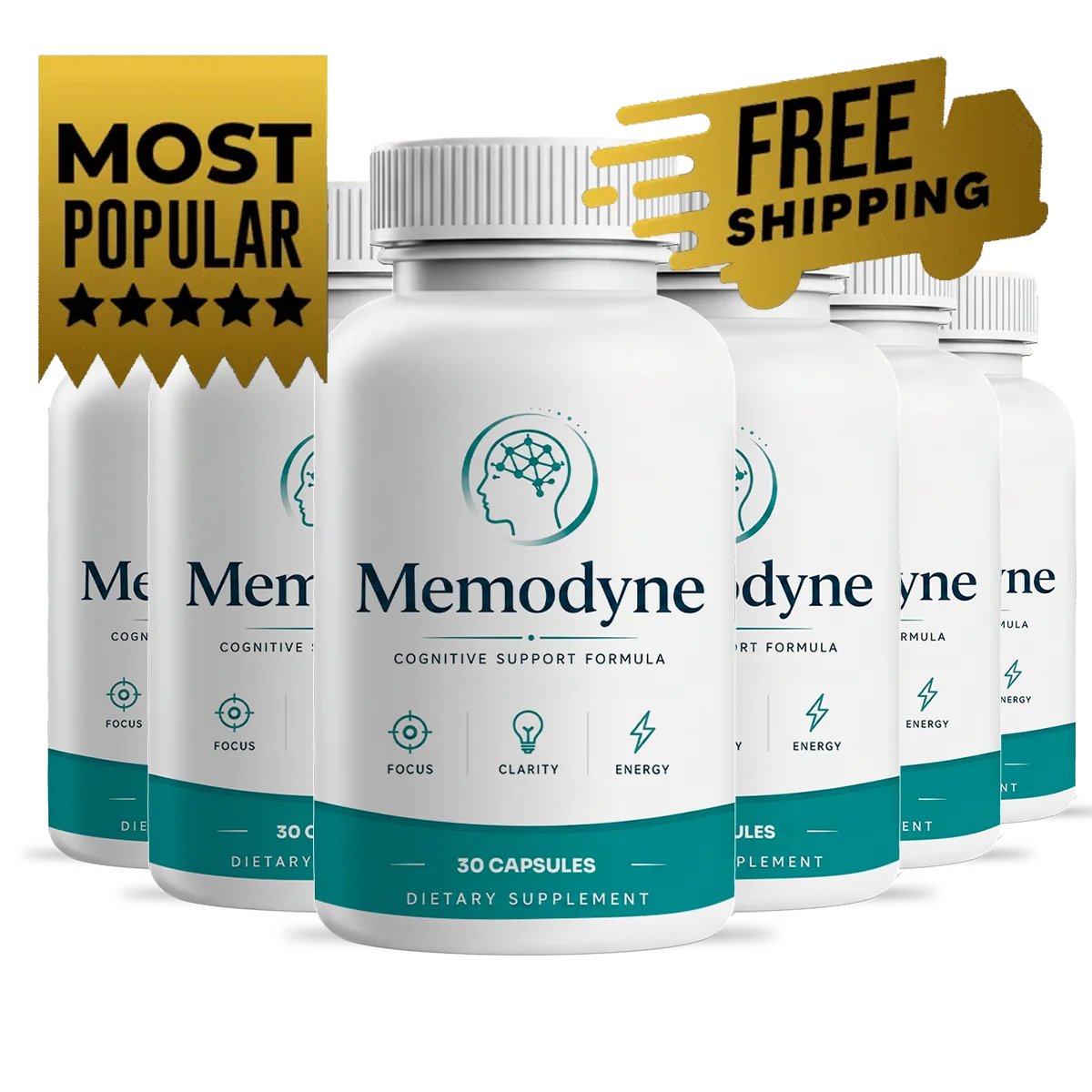
Memodyne brings together a full stack of memory and focus botanicals — Bacopa, Lion’s Mane, Ginkgo, Panax ginseng, phosphatidylserine and more — in one easy daily capsule, backed by a 60-day guarantee.
See Memodyne PackagesFrequently asked questions
What is the recommended citicoline dosage?
Most research uses about 250 to 500 mg of citicoline per day, with some studies going higher for specific purposes. Many people take it once in the morning or split it into two doses. Always follow the dose printed on your product and check with a clinician if you take medication.
How does citicoline work?
Once absorbed, citicoline provides choline and cytidine. The choline is used to make acetylcholine, the neurotransmitter tied to focus and memory, and to build phosphatidylcholine for brain-cell membranes. The cytidine converts to uridine, which is also involved in membrane synthesis, so citicoline supports both signalling and structure.
Is citicoline the same as choline bitartrate?
No. Choline bitartrate is a simple, inexpensive choline salt, while citicoline (CDP-choline) is a more complex molecule that also supplies cytidine and is well studied for cognition. They both provide choline, but citicoline is generally regarded as a more brain-targeted nootropic form.
Does citicoline help with focus?
Citicoline is studied for supporting attention, focus and working memory, likely through its role in acetylcholine production and healthy brain-cell membranes. As a supplement it is intended to support normal cognitive function and is not a treatment for any condition.
Can I take citicoline with other nootropics?
Yes, citicoline is often paired with botanicals such as Bacopa and Ginkgo, and it complements ingredients that affect acetylcholine because it supplies the choline raw material. If you take prescription medication, check with a healthcare professional before combining supplements.
References
- Office of Dietary Supplements, National Institutes of Health — choline fact sheet (ods.od.nih.gov).
- National Center for Complementary and Integrative Health — supplement quality and safety overviews (nccih.nih.gov).
- Journal of Nutrition and Food Science & Nutrition — studies of citicoline, attention and working memory.
- Methods and Findings in Experimental and Clinical Pharmacology — reviews of CDP-choline pharmacology.
† These statements have not been evaluated by the FDA. This product is not intended to diagnose, treat, cure or prevent any disease. This article is for general information only and is not medical advice.