Memodyne Official Website › Journal › Safety
SafetyMemodyne side effects: what to know before you start
Quick answer: Memodyne's named ingredients are a vitamin, a mineral and amino acids, and the usual effects are mild: a warm flush from niacin, constipation from calcium, or an upset stomach. Four ingredients act on nitric oxide, so ask a doctor first if you take a nitrate, a PDE5 inhibitor or blood-pressure pills.
What does the seller say about safety?
The seller's FAQ says the formula contains "only naturally derived ingredients, in vegetable capsules (hypromellose), without artificial stimulants". It adds that no significant side effects have been reported by users. That last point describes what has come back through the seller's own support channel. It is not a safety trial, so we read it as a note and not as proof.
The more useful line is the seller's caution. Anyone who is pregnant, nursing, under eighteen, or on medication for blood pressure, blood thinning or vasodilation should show the label to a doctor before starting. Memodyne is written for healthy adults of 18 and over.
What can each Memodyne ingredient cause?
No amount is printed for any ingredient, so none of the notes below can be scaled to the capsule. They describe each name at the amounts its own studies used.
- Niacin: flushing from the nicotinic acid form. It is more common in large amounts and less common at or below the 35 mg upper intake level.
- Calcium carbonate: constipation and bloating at supplemental amounts, and it can bind some medicines in the gut.
- L-arginine and L-arginine AKG: stomach upset at gram amounts, and lower blood pressure in some trials.
- L-citrulline HCl and malate: well tolerated in the trials our team read, and the 8.8 g trial reported no adverse events.
Taking the capsule with the full 8 oz glass of water on the label helps with stomach comfort. If a flush appears, a little food can help, and the panel on your bottle shows the real niacin figure.
Which interaction matters most?
Four of the six names feed the same pathway. Arginine is the starting material for nitric oxide, and citrulline is turned back into arginine. Nitric oxide relaxes the walls of blood vessels.
Some medicines do a similar job by other routes. Nitrates donate nitric oxide directly. PDE5 inhibitors stop the downstream signal from being broken down. Blood-pressure pills lower pressure in their own ways. Stacking them can lower pressure further than anyone intended. This is one conversation, held once, with the person who writes your prescription, and it is best held before the first capsule.
Bring the bottle so the label can be read. Customer support on +1 (302) 200-3480 can read the printed panel to you if you need the exact figures for the appointment.
What about calcium and other prescriptions?
Calcium can bind to some prescriptions in the gut, including thyroid medicine and several antibiotic groups, and that reduces how much of them is absorbed. The usual advice is to space them several hours apart. Your pharmacist can tell you the right gap for your own medicine.
The label also asks for the capsule 20 to 30 minutes before a meal. Calcium carbonate dissolves best with stomach acid, and our article on calcium carbonate before breakfast sets out how that timing question looks. Read the how to take Memodyne page for the full directions line.
When should you stop taking it?
- Light-headedness on standing. It is what an unintended blood pressure drop can feel like.
- A persistent headache that began with the capsule and has not settled.
- Constipation that began with the bottle. It would point to the calcium.
- Any rash, swelling or trouble breathing. Stop and seek help at once, because that is an allergic pattern and not an ordinary side effect.
- Anything at all, if the person who prescribes for you asks you to stop.
The label ends with "or as directed by your healthcare professional", and that line overrides everything else on the bottle.
How can you start in a sensible way?
- Read the printed panel on arrival and photograph it.
- If you take any prescription, show the bottle to your doctor or pharmacist first.
- Take one capsule a day, never two, with a full glass of water.
- Keep a one-line note each week about how you feel.
- Remember the window. It is 60 days from the date of purchase, and the seller asks for 30 days of use before a claim.
The buyers' own reports are in reviews and complaints, and the longer safety page is Memodyne side effects. Not sure the capsule suits you? See who Memodyne is for.
Frequently asked questions
What are the side effects of Memodyne?
The usual ones are mild: a warm flush from niacin, constipation from calcium, or an upset stomach from the amino acids. Four ingredients lower blood pressure in some studies, so check with a doctor first if you take blood-pressure medicine.
Can I take Memodyne with blood pressure medicine?
Ask whoever prescribes it before the first capsule. Four of the six names act on nitric oxide, as do some blood-pressure medicines, nitrates and PDE5 inhibitors.
Does Memodyne contain caffeine?
No stimulant is named on the artwork, and the seller's FAQ says the formula has no artificial stimulants.
Is Memodyne safe to take every day?
Memodyne is a dietary supplement taken as one capsule a day. If you take medicine or have a health condition, check with your doctor first, and stop if you feel unwell.
Nothing here is medical advice, and nothing says that Memodyne improves memory. Memodyne is a dietary supplement, not a drug, and results vary. Ask a doctor or pharmacist about your own medicines.
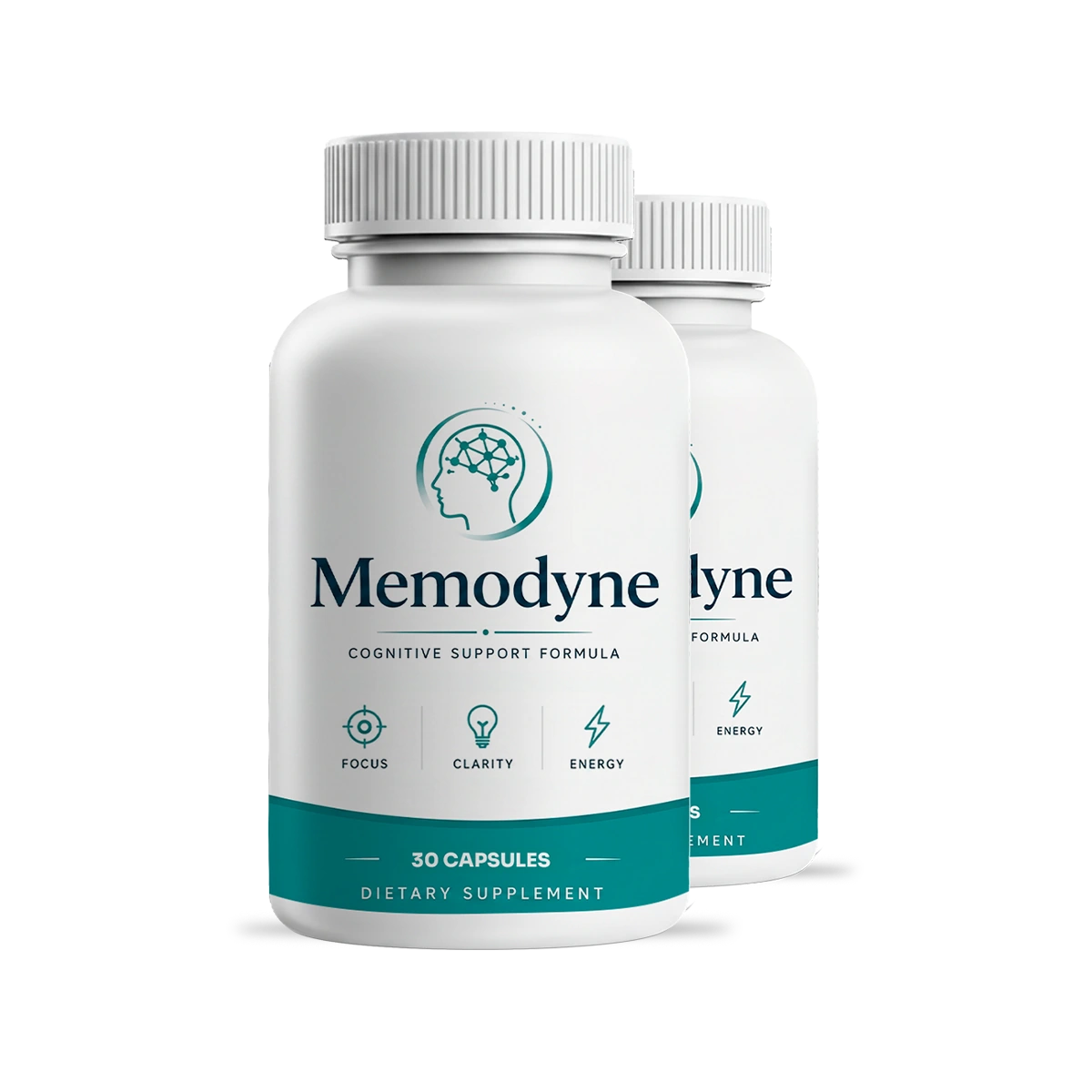
Order Memodyne once the interaction question is settled
One conversation with whoever prescribes for you covers it, and it is worth having before the first capsule. Sixty days from purchase to decide.
Two bottles $158 · three bottles $207 · six bottles $294 · 60 days from purchase
Order Memodyne From This ShopLot MEM-26/ME-6233 · 30 capsules, one each morning · dispatched from within the United States