Memodyne Official Website › Guides
GuidesLonger reading from the Memodyne desk
Two long guides about the category, and a journal of five pieces.
The guides are for somebody who has not chosen a product yet: how to read a memory supplement label, and what the evidence in this category actually looks like. The journal takes single questions this particular bottle raises and goes further into them.
Where to start if you have not decided on a product, and where to go if you want one question answered properly.
Two Memodyne category guides
Choosing a memory supplement
A method for reading any label in this aisle: what a Supplement Facts panel tells you, what an ingredient name on its own does not, how to compare a capsule against the trial an ingredient came from, and the four groups the category sorts into.
The memory supplement guide
What the published evidence in this category actually shows: the large null trials, the small positive ones, and the three interventions with randomised cognitive results that nobody sells in a bottle.
The Memodyne journal
Five pieces, each one about a question this particular label raises rather than about the category in general. They run to fifteen hundred words or more and they are the longest writing on this website.
- The journal index lists all five with a summary of each.
- The sixth name on the bottle, and why two documents disagree about it.
- What eight-point-eight grams of citrulline in an athlete has to do with a capsule.
- Why a label with no numbers on it is a harder thing to evaluate than a label with disappointing ones.
- Thirty-five milligrams of niacin, and the one comparison this label allows.
- Calcium carbonate before breakfast, and a 1985 study that makes it awkward.
Where to start with Memodyne, depending on what you want
| If you want | Start at |
|---|---|
| To know what is in the bottle | Ingredients |
| To know whether it suits you | Who it's for |
| To know what it costs and what the window is | Pricing and Guarantee |
| To know whether it interacts with a prescription | Side effects, then a prescriber |
| To decide whether to buy anything in this category at all | Choosing a memory supplement |
Five routes into the same website, arranged by the question rather than by the menu.
What this desk publishes, and what it deliberately does not
Published here
- What the bottle artwork prints, reproduced rather than paraphrased.
- Prices and terms read off the seller's page on a stated date.
- Research pulled from the NCBI services, with the amount each trial used read from its own abstract.
- This desk's own opinions, labelled and kept in sections whose job it is to carry them.
- The places where two sources about this product disagree.
Not published here
- Amounts for ingredients whose amounts are not published.
- A named medical reviewer who does not exist. The byline is an editorial desk and says so.
- Testimonials, because a retailer moderating testimony about its own product is worth nothing to a reader.
- Citations typed from memory. Every reference here was retrieved and checked, and two well-known papers in this field are left out because PubMed carries a retraction or a retirement marker for them.
- Disease claims of any kind.
How long these pages take to read
| Page | Roughly | Worth it if |
|---|---|---|
| Choosing a memory supplement | Eight minutes | You have not decided on a product and want a method that survives the next label too |
| The memory supplement guide | Nine minutes | You want to know what the published evidence in this aisle actually looks like before spending anything |
| Ingredients | Twelve minutes | You have decided on this product and want the six names properly |
| A journal piece | Eight minutes each | One specific question is bothering you and a paragraph will not settle it |
Estimated at a couple of hundred words a minute. The guides are the ones to read first and the journal is the one to read last.
A reader with twenty minutes should spend them on the two guides. A reader with five should read the ingredients page and stop.
Who publishes this Memodyne website?
- Yeung LK, Alschuler DM, Wall M, et al. Multivitamin Supplementation Improves Memory in Older Adults: A Randomized Clinical Trial. Am J Clin Nutr. 2023;118(1):273-282. PMID 37244291. https://pubmed.ncbi.nlm.nih.gov/37244291/
- DeKosky ST, Williamson JD, Fitzpatrick AL, et al. Ginkgo biloba for prevention of dementia: a randomized controlled trial. JAMA. 2008;300(19):2253-62. PMID 19017911. https://pubmed.ncbi.nlm.nih.gov/19017911/
- Lin FR, Pike JR, Albert MS, et al. Hearing intervention versus health education control to reduce cognitive decline in older adults with hearing loss in the USA (ACHIEVE): a multicentre, randomised controlled trial. Lancet. 2023;402(10404):786-797. PMID 37478886. https://pubmed.ncbi.nlm.nih.gov/37478886/
- SPRINT MIND Investigators for the SPRINT Research Group; Williamson JD, Pajewski NM, Auchus AP, et al. Effect of Intensive vs Standard Blood Pressure Control on Probable Dementia: A Randomized Clinical Trial. JAMA. 2019;321(6):553-561. PMID 30688979. https://pubmed.ncbi.nlm.nih.gov/30688979/
- Using Dietary Supplements Wisely. National Center for Complementary and Integrative Health, National Institutes of Health. https://www.nccih.nih.gov/health/using-dietary-supplements-wisely
- Questions and Answers on Dietary Supplements. U.S. Food and Drug Administration. https://www.fda.gov/food/information-consumers-using-dietary-supplements/questions-and-answers-dietary-supplements
Order Memodyne once the reading is done
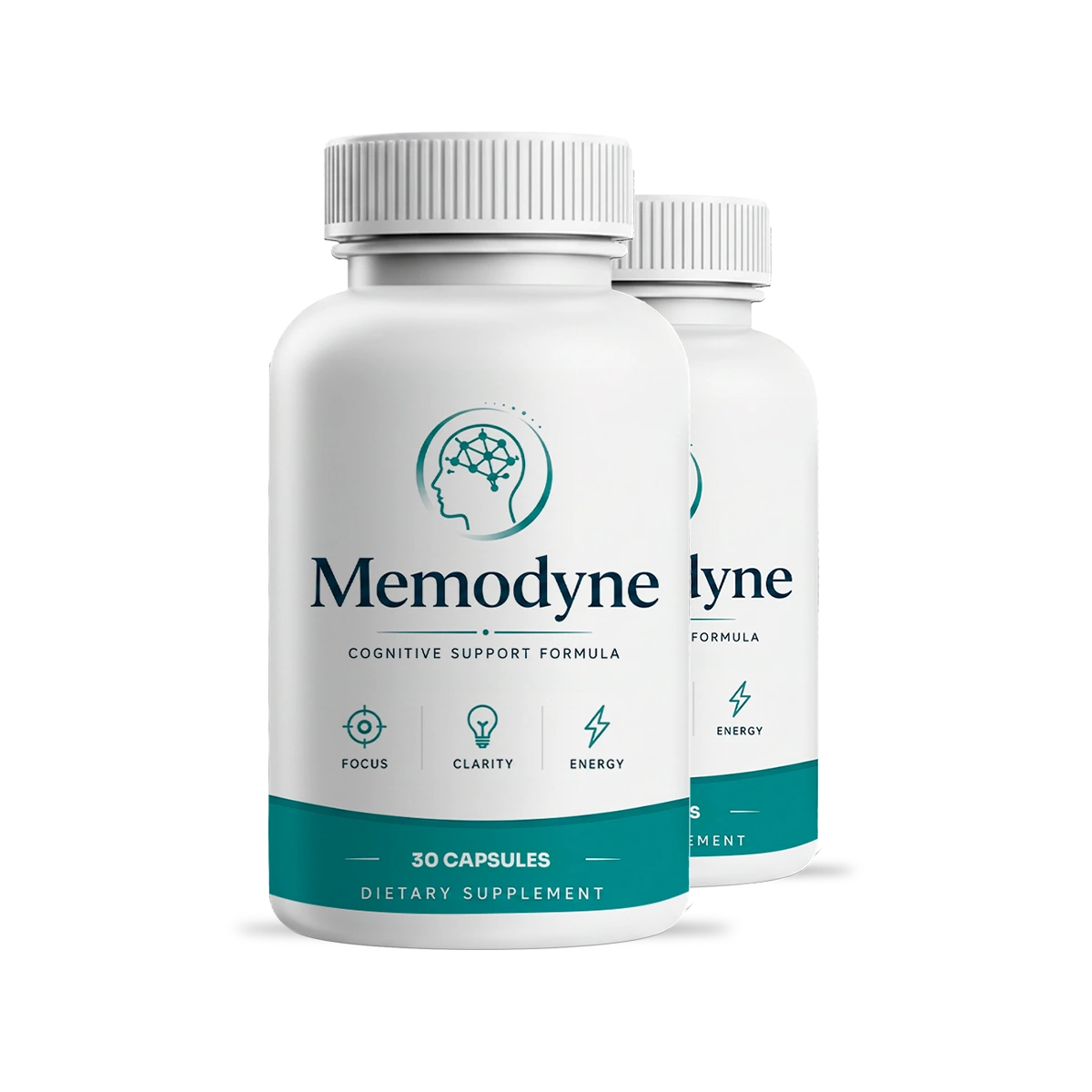
Six names, no published amounts, one capsule a morning and sixty days from purchase to decide. The guides are there so that decision is made with the category in view.
Two bottles $158 · six bottles $294 · 60 days from purchase
Order Memodyne From This ShopLot MEM-26/ME-6233 · 30 capsules, one each morning · dispatched from within the United States