Memodyne Official Website › Journal › Measurement
MeasurementWhat a memory test score actually measures, and how many points count
Every study of a memory supplement ends in a number, usually a score on a short test, and every app that promises to track your own memory does the same. This piece explains what those numbers are, why a score can climb for reasons that have nothing to do with a capsule, how many points a change has to be before it counts, and what to ask when a clinician or a product page hands you one. It is about measurement, not about Memodyne, and it applies to any label in this aisle.
A score is a snapshot of one performance
A memory test does not measure memory the way a ruler measures length. It samples behaviour: remember these five words, draw this clock, name these animals, copy this shape. The score is a count of what happened during ten or fifteen minutes on one particular day, and everything that affects a person on the day affects the count. Sleep, mood, a noisy room, a doctor's white coat, the worry about being tested at all.
That does not make tests useless. It makes them a rough instrument that is best at separating people who are clearly different from each other and worst at detecting small changes in the same person over a short time. Which is precisely the job a supplement trial gives them. When a product page says a study found a score improved, the useful questions are what test, how many points, compared with what, and whether the change was bigger than the instrument's own wobble.
This is a dietary supplement website, and nothing on this page is medical advice or a way to test yourself for anything. Where forgetfulness has become the kind other people remark on, the useful next step is an appointment rather than an order. The National Institute on Aging explains which changes are ordinary and which are not, and lists the signs that are worth a doctor's visit.
The two tests behind most headlines
Two screening tests turn up in most of the research on older adults. The first is the Mini-Mental State Examination, or MMSE. A comprehensive review of what had been learned about it over 26 years judged its reliability and construct validity satisfactory, and found it highly sensitive for moderate to severe cognitive impairment and less so for mild. It also found the test is highly verbal, that not all items are equally sensitive, and that scores are affected by age, education and cultural background but not gender. The reviewers' bottom line was that the MMSE should not by itself be used as a diagnostic tool to identify dementia.
The second is the Montreal Cognitive Assessment, or MoCA, a ten-minute screening tool built to catch mild cognitive impairment in people who score normally on the MMSE. Its 2005 validation study compared 94 patients with mild cognitive impairment, 93 with mild Alzheimer's disease and 90 healthy older controls. At a cutoff of 26, the MMSE picked up 18% of the people with mild cognitive impairment and the MoCA picked up 90%. In mild Alzheimer's disease the figures were 78% and 100%. That is the MoCA's whole case: it finds more.
The other side of that case is specificity, the share of healthy people correctly labelled as fine. It was 100% for the MMSE and 87% for the MoCA. Applied to 90 healthy controls, 87% specificity means roughly a dozen would have scored below the cutoff and been flagged despite having nothing wrong with them. A test that is more sensitive will usually flag more healthy people, which is a reasonable price for a screening tool and a reason to be careful with a single result. PubMed lists a 2019 erratum for the original MoCA paper, so the record is worth checking before quoting it.
How big does a change have to be?
A screening test can be very good at telling a person with cognitive impairment from one without, and still be a blunt tool for measuring change. Two ideas help. The minimal detectable change is the size of shift you need before you can be reasonably confident it is more than measurement noise. The minimal clinically important difference is the smallest change that matters to the person.
A 2024 study worked out both for the MoCA in 1,131 stroke survivors, mean age 71, tested on admission and again at six months. The mean scores were 22 at the start and 25 at six months, and the minimal detectable change came out at 5.1 points. The clinically important difference varied with the yardstick: about 2 points against one patient-reported recovery scale, 1.6 against a quality-of-life measure and 1 point by a distribution method. The authors' reading was that even a small change can matter to a stroke survivor, but that larger differences are needed before anyone can be sure a change is real and not the test's own variation. They also cautioned that the anchor-based figures came from small samples.
Two limits on how far to carry those numbers. They come from stroke survivors, whose scores were on average rising as they recovered, and they may not describe healthy older adults or people with a memory complaint. But they give a sense of scale that is otherwise hard to find. On a 30-point test, a shift of 5.1 points is 17% of the whole scale. A shift of one point is a bit over 3%. Those are very different sizes of claim, and a headline about an improved score rarely says which one it is.
| Idea | What it asks | The MoCA figure in that stroke cohort |
|---|---|---|
| Minimal detectable change | Is this more than test noise? | 5.1 points, about 17% of the 30-point scale |
| Minimal clinically important difference | Would the person feel it matters? | About 1 to 2 points, depending on the yardstick |
| Baseline to six months | What did recovery look like? | Mean 22 rising to 25 |
Figures are taken from the abstract of Lindvall and colleagues, 2024, in stroke survivors. They are illustrations of scale, not thresholds for anyone else.
The second time around
Then there is the problem that undoes most casual before-and-after comparisons. A person tested twice on the same or a similar test usually does a little better the second time. Researchers call it a practice effect: a rise in scores from memory of specific items, learned strategies or simple familiarity with how tests work. It has nothing to do with whether anything changed in the person's brain.
A meta-analysis pooled nearly 1,600 individual effect sizes from studies that gave the same neuropsychological tests more than once. It found that the size of the practice effect was related to whether alternate forms were used, to the participants' ages and diagnoses, and to the length of the gap between tests. The authors' message was that practice effects need to be taken into account whenever change over time is interpreted, in clinical work and in research alike.
A companion meta-analysis by the same authors looked at test-retest reliability, meaning how closely a person's scores agree with themselves across two sittings. For most measures it was adequate to high, with correlations of 0.7 and above, and it was largely robust across age, diagnosis and use of alternate forms. But some of the memory and executive functioning scores fell below 0.7, and the authors named ceiling effects, practice effects and genuine variation over time as possible reasons. Some of the memory scores, the ones people most want to track, are among the less stable.
Together those two findings explain why a well-run trial has a placebo group, and why the honest comparison is between the group that took the capsule and the group that did not, not between a person and their earlier self. The placebo group gets the same practice effect, the same expectation and the same nerves. Whatever difference remains between the groups is what the capsule might be responsible for. A before-and-after gain in the treated group alone tells you almost nothing.
Alternate forms exist for this reason. The practice-effect meta-analysis found that whether an alternate form was used was one of the factors related to the size of the effect, so a report that gives a before-and-after gain should say which version of the test was used at each visit. If the same form was used both times, part of the gain belongs to familiarity, and only the comparison with the placebo group can sort that out.
Reading a supplement claim that quotes a score
With those pieces in place, a claim that a product improved memory scores can be taken apart with six questions.
- Which test? A ten-minute screening test built to separate impaired from unimpaired is a different instrument from a battery of memory tasks built to measure change.
- Compared with what? Only a between-group difference against a placebo counts. A within-group gain is what practice and expectation produce on their own.
- How many points? A score difference of one point on a 30-point scale is a bit over 3% of the range, and a change of that size would be well below the 5.1-point detectable change found in the stroke cohort.
- In whom? A change in a group who started with low scores may not appear in people who started with normal ones.
- For how long? Practice effects depend on the gap between sittings, as the meta-analysis found, so a short gap between two tests of the same kind is a reason to look harder at the control group.
- Was it repeated? The first study of anything is a lead.
None of these questions is hostile. A real effect passes all six, and it is much easier to be confident about a result once it has.
What to ask when a clinician offers a test
The same understanding is useful on the receiving end of a test. If a doctor or a nurse offers a memory or thinking screen, the following questions make the result far more useful.
- Which test is it, and what is the cutoff? A screening score is a prompt for a further look, not a diagnosis, and the reviewers of the MMSE said as much.
- Were age, education and language taken into account? The MMSE review found all three affect scores.
- Is there a baseline to compare with? One reading tells you where you stand. Two, a year apart, tell you which way things are moving, provided the same test is used and the practice effect is allowed for.
- What happens next? A low score is the start of a conversation about causes, not the end of one.
That last point is the most important. A score can be low because of medicines, mood, sleep, a thyroid problem or a vitamin deficiency, as well as because of a progressive condition, and a clinician's job is to work out which. It is one reason this desk's advice for anyone who is genuinely worried about their memory is to start with an appointment and treat any capsule as a separate, later decision.
Where this leaves a memory capsule
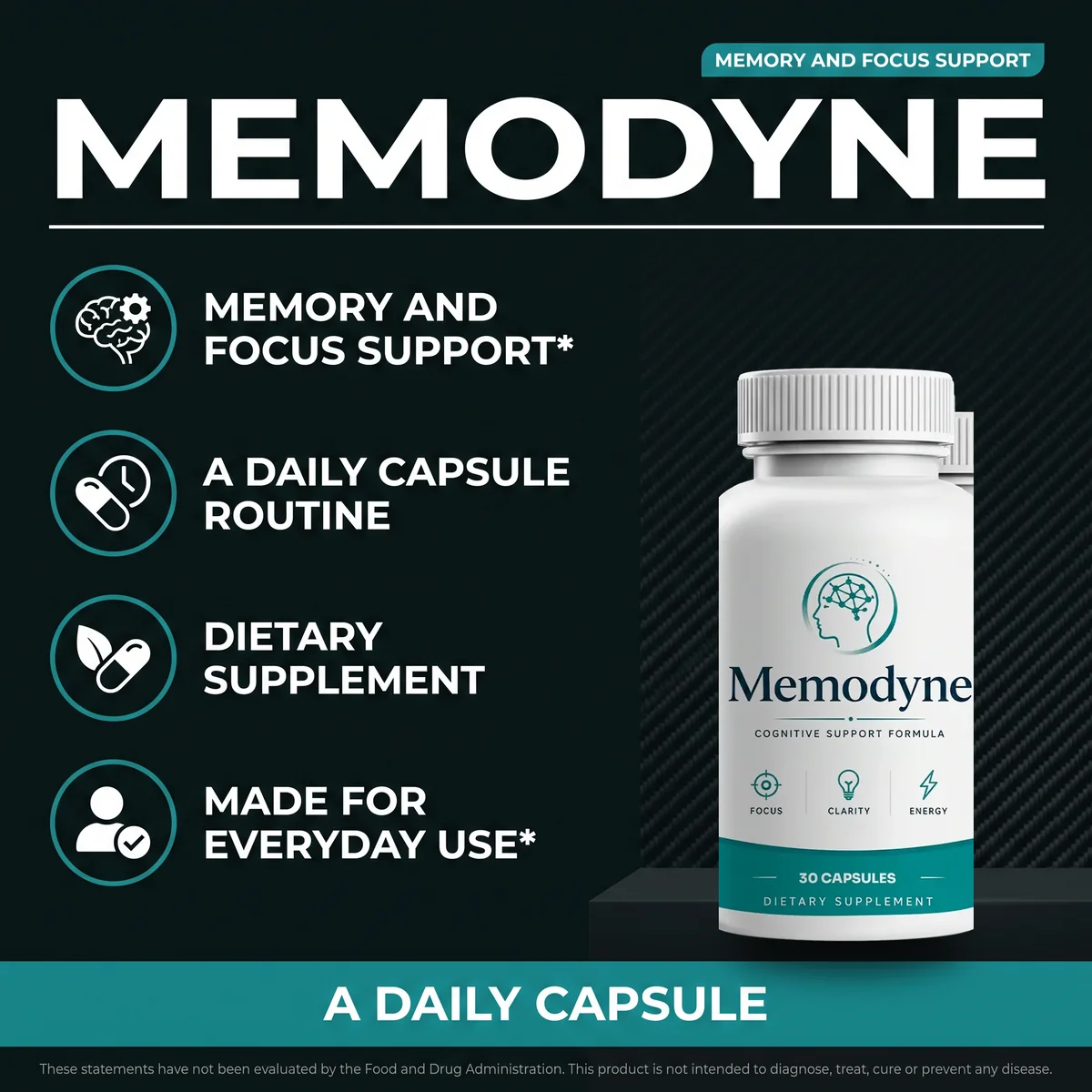
The Memodyne sales page and label name five supports: to enhance memory function and support overall cognitive health, to protect the brain from oxidative stress and improve mental clarity, to boost neural communication and promote better brain performance, to support long-term brain health and improve focus and concentration, and to optimise neurotransmitter production and contribute to a sharper, more agile mind. Those are structure and function statements. The Food and Drug Administration has not evaluated them, the product is not intended to diagnose, treat, cure or prevent any disease, and none of the five is stated as a change in a test score.
That is worth saying plainly, because it means there is no number on the label to hold up against the arithmetic above. A buyer who wants to know whether the capsule does anything for them cannot borrow a published score, since no trial of this capsule or of these six names together exists. What they can do is run the fairest test available, which is the one the article on buying on names describes: write down what you want to notice before the first capsule, count the capsules, change nothing else, and decide on a date fixed in advance, inside the sixty days from purchase.
The ingredients themselves are covered elsewhere on this website. Four names, one mechanism counts what the list is really made of, and the thirty-capsule article sets the trial amounts beside what a capsule can carry. This piece sits alongside them as a reading skill: whatever the number, ask who was tested, against what, how many points, and how many of those points the test would have produced on its own.
There is also a mismatch of kind between those five statements and any test score. Memory function is a behaviour a test can sample. Oxidative stress and neurotransmitter production are laboratory quantities, measured in blood, tissue or cells, and a memory test does not measure them. So even a well-run trial in which a capsule improved a test score would not show that any of the mechanisms named on the page had been engaged, and a trial that measured a mechanism would not show that anyone remembered more. The two kinds of evidence answer different questions.
Order Memodyne from the official U.S. shop
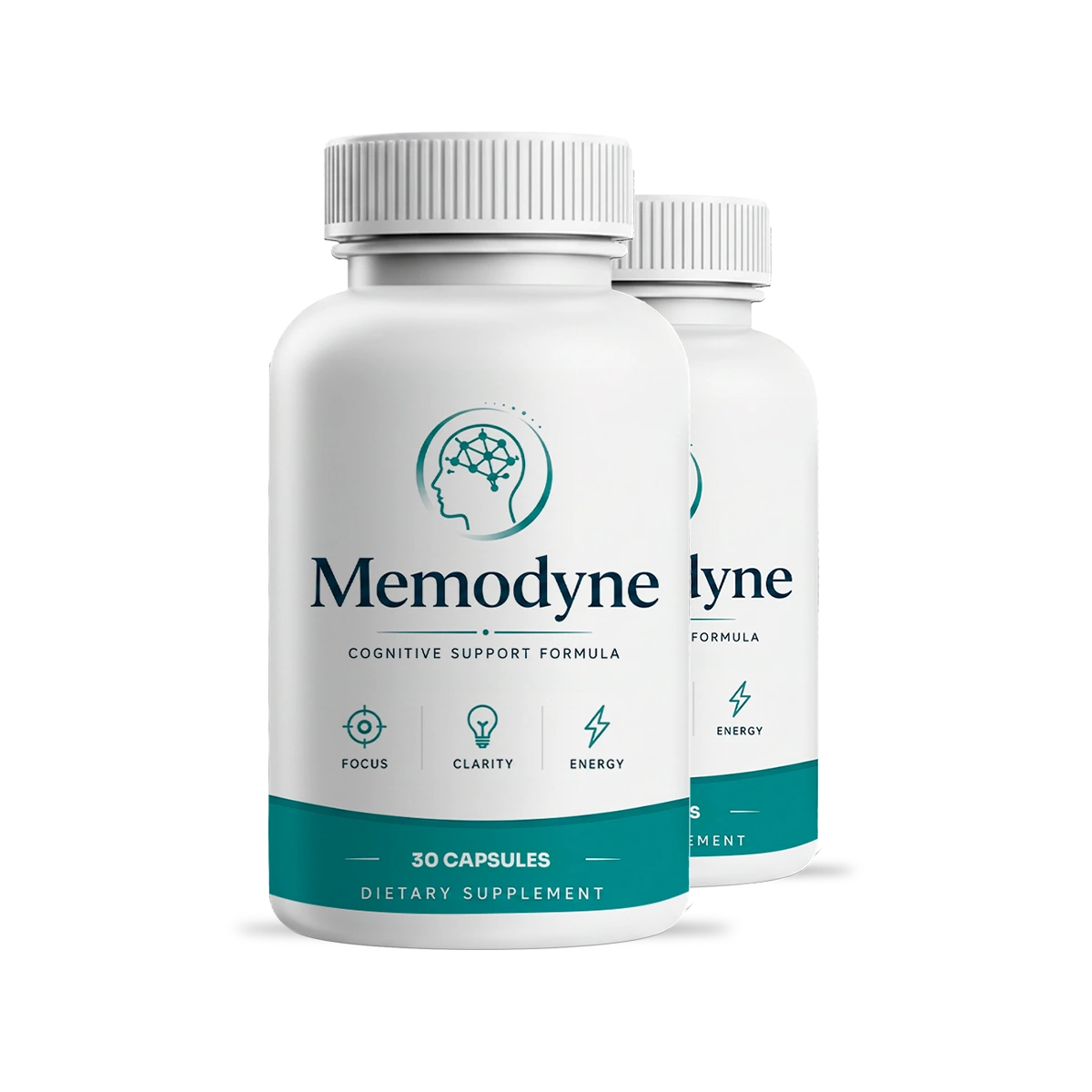
One capsule a day, thirty to a bottle, six names on the artwork and no amounts beside them. No trial has scored this capsule on a test, so the sixty days from purchase are yours to use as a fair one.
Two bottles $158 · six bottles $294 · 60 days from purchase
Order Memodyne From This ShopLot MEM-26/ME-6233 · 30 capsules, one each morning · dispatched from within the United States
- Tombaugh TN, McIntyre NJ. The mini-mental state examination: a comprehensive review. J Am Geriatr Soc. 1992;40(9):922-35. PMID 1512391. https://pubmed.ncbi.nlm.nih.gov/1512391/
- Nasreddine ZS, Phillips NA, Bédirian V, Charbonneau S, Whitehead V, Collin I, et al. The Montreal Cognitive Assessment, MoCA: a brief screening tool for mild cognitive impairment. J Am Geriatr Soc. 2005;53(4):695-9. PMID 15817019. https://pubmed.ncbi.nlm.nih.gov/15817019/
- Lindvall E, Abzhandadze T, Quinn TJ, Sunnerhagen KS, Lundström E. Is the difference real, is the difference relevant: the minimal detectable and clinically important changes in the Montreal Cognitive Assessment. Cereb Circ Cogn Behav. 2024;6:100222. PMID 38745691. https://pubmed.ncbi.nlm.nih.gov/38745691/
- Calamia M, Markon K, Tranel D. Scoring higher the second time around: meta-analyses of practice effects in neuropsychological assessment. Clin Neuropsychol. 2012;26(4):543-70. PMID 22540222. https://pubmed.ncbi.nlm.nih.gov/22540222/
- Calamia M, Markon K, Tranel D. The robust reliability of neuropsychological measures: meta-analyses of test-retest correlations. Clin Neuropsychol. 2013;27(7):1077-105. PMID 24016131. https://pubmed.ncbi.nlm.nih.gov/24016131/
- Memory Problems, Forgetfulness, and Aging. National Institute on Aging, National Institutes of Health. https://www.nia.nih.gov/health/memory-loss-and-forgetfulness/memory-forgetfulness-and-aging-whats-normal-and-whats-not